Ask me more!
Welcome to the Cretaceous Period
The pinnacle of dinosaur evolution and diversity. During this time, dinosaurs dominated every terrestrial ecosystem on Earth, reaching their greatest variety in size, form, and behavior. It was a time when iconic species like the massive predator Tyrannosaurus rex, the horned Triceratops, and the duck-billed Hadrosaurs roamed the land.
The Beginning of the Cretaceous Period
The Cretaceous Period began around 145 million years ago, following the Jurassic Period. By this time, dinosaurs were well-established as the dominant land animals. The world was experiencing a warmer climate, and the supercontinent Pangaea continued to break apart, f orming separate landmasses that would become today's continents. The opening of new oceans and the development of distinct ecosystems set the stage for the dramatic evolution and diversification of dinosaurs during this period.
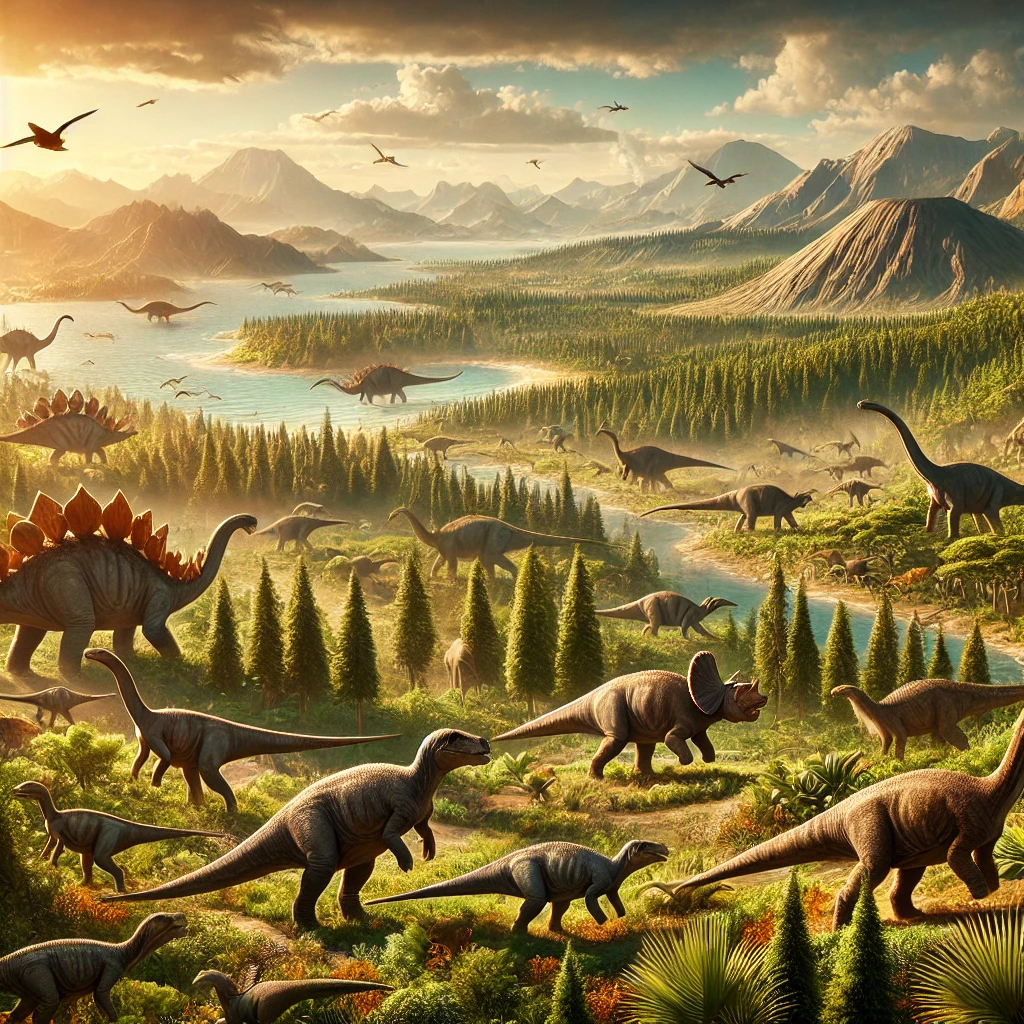
Land animals, lush forests, and the ongoing breakup of the supercontinent Pangaea.
Early Cretaceous Dinosaur Diversification
In the Early Cretaceous, dinosaurs continued to diversify into new forms. Theropods, including large predators like Acrocanthosaurus, became more varied, and early members of groups like tyrannosaurs and dromaeosaurs (raptors) began to emerge. At the same time, the ornithopods, including Iguanodon, were developing advanced chewing mechanisms, allowing them to exploit new plant food sources. Meanwhile, sauropods continued to thrive, particularly in the southern continents like Gondwana.
The Rise of Ankylosaurs and Ceratopsians
By around 130 million years ago, heavily armored dinosaurs like ankylosaurs and nodosaurs began to rise in prominence. These herbivores, with their protective bony plates and clubbed tails, were well-suited to defending against the large predators of the time. At the same time, the early ceratopsians (horned dinosaurs) started to appear in Asia, with species like Psittacosaurus, marking the beginning of a lineage that would later produce the famous Triceratops.
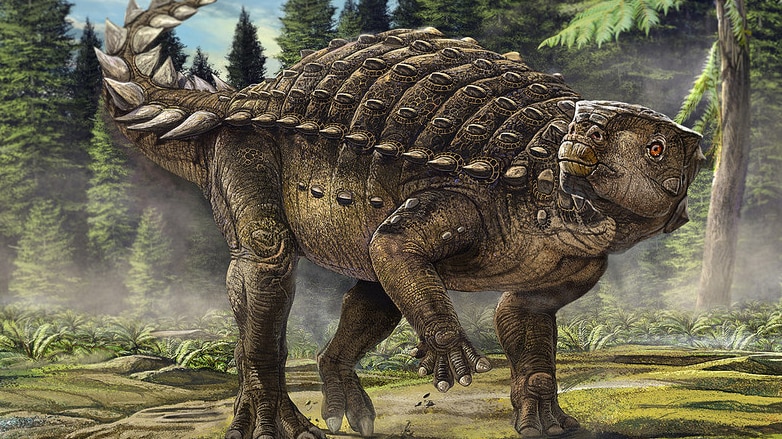
An Ankylosaur, with its armored body and club-like tail, roams the prehistoric landscape, showcasing its impressive defenses against predators.
Mid-Cretaceous: The Apex of Theropod Predators
The mid-Cretaceous (around 120 million years ago) saw the rise of some of the largest and most formidable carnivorous dinosaurs, including Spinosaurus and Carcharodontosaurus. These massive theropods, particularly in Gondwana (modern-day Africa and South America), were top predators, capable of hunting large prey, including sauropods. Spinosaurus, with its unique adaptations like a sail on its back and semi-aquatic lifestyle, stood out as one of the most specialized dinosaurs of the time.
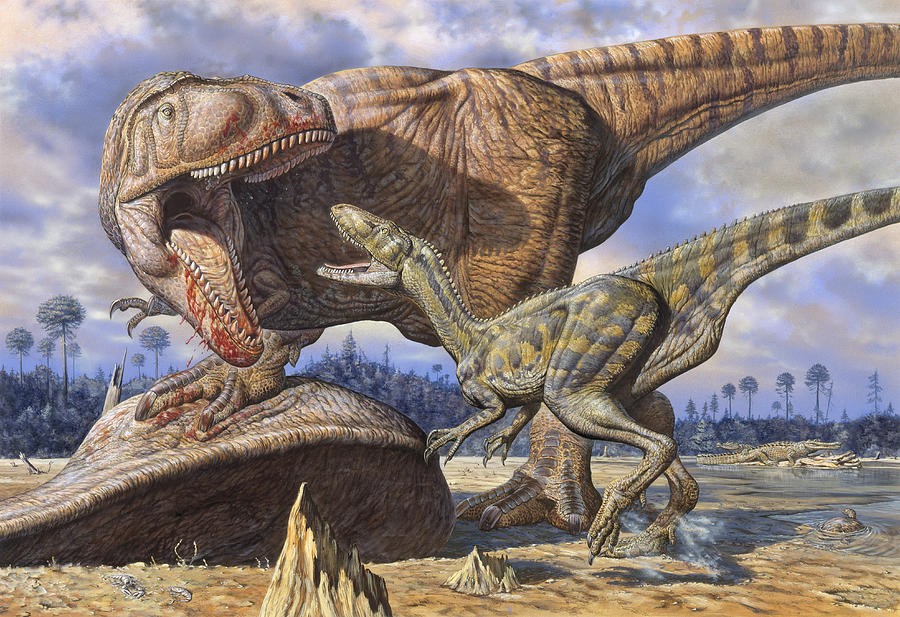
A Carcharodontosaurus stands triumphantly over a defeated dinosaur, showcasing its power and dominance in a prehistoric landscape.
Herbivorous Giants and the Spread of Flowering Plants
By around 115 million years ago, sauropods remained among the largest land animals, with species like Argentinosaurus reaching incredible sizes. These giant herbivores coexisted with smaller herbivorous dinosaurs, like hadrosaurs (duck-billed dinosaurs) and ceratopsians, which continued to evolve. During this time, flowering plants (angiosperms) began to appear and spread rapidly. These new plants provided a rich and diverse food source, which herbivorous dinosaurs exploited, leading to further diversification of plant-eating dinosaurs.
Late Cretaceous: The Dominance of Tyrannosaurs
In the Late Cretaceous, around 80 million years ago, the tyrannosaurids became apex predators in North America and Asia. Species like Tyrannosaurus rex, which appeared closer to the end of the Cretaceous, were some of the largest and most powerful predators to ever walk the Earth. With massive jaws, strong teeth, and an enhanced sense of smell, T. rex ruled the ecosystems of North America, while other large theropods dominated other parts of the world.
The Explosion of Ceratopsians and Hadrosaurs
By around 75 million years ago, two major groups of herbivorous dinosaurs—ceratopsians and hadrosaurs—reached their peak in diversity and numbers. Ceratopsians, like Triceratops and Torosaurus, evolved large frills and horns for display and defense, while hadrosaurs became highly successful, with species like Parasaurolophus featuring elaborate crests. These dinosaurs often lived in large herds, suggesting complex social behaviors, and were some of the most successful herbivores of the Cretaceous.
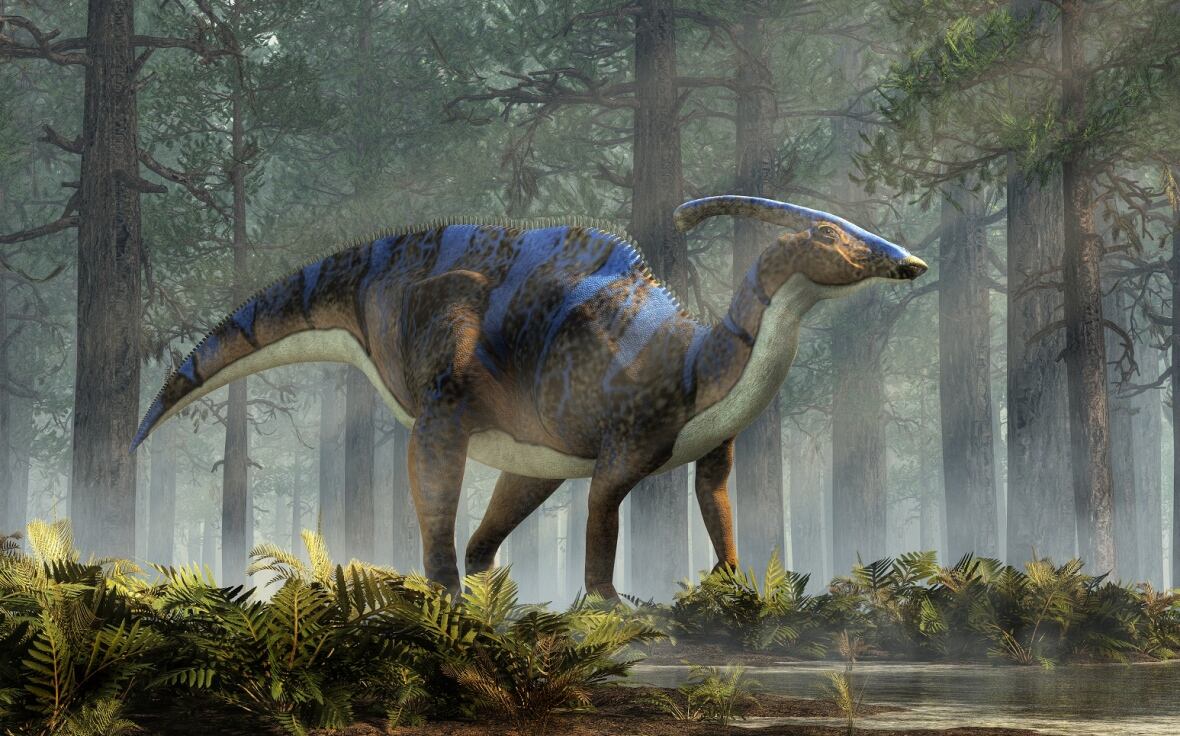
A hadrosaur in its natural habitat, a misty forest, showcasing its distinctive cranial crest and broad, flat beak.
Coastal Ecosystems and Marine Dinosaurs
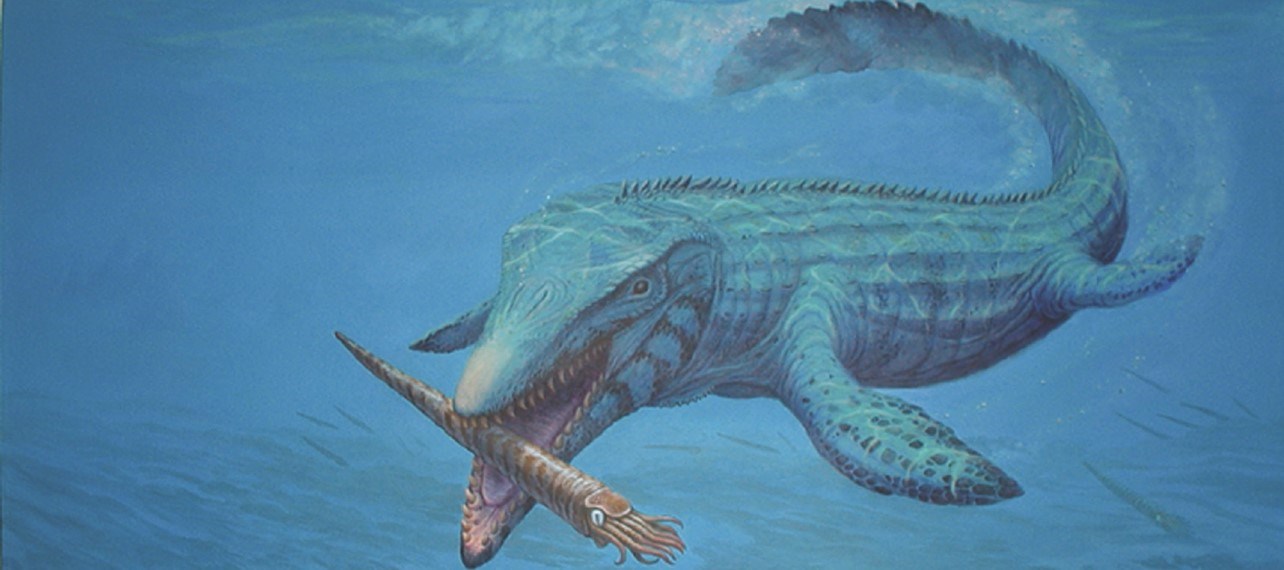
During the Late Cretaceous, rising sea levels created vast inland seas, which gave rise to unique coastal and marine ecosystems. Marine reptiles, such as mosasaurs, became the dominant predators in these environments. Although not true dinosaurs, these giant sea-dwelling reptiles were closely related and often reached enormous sizes. Meanwhile, pterosaurs, the flying reptiles, also flourished, with species like Quetzalcoatlus having wingspans larger than small planes.