Ask me more!
Welcome to the Jurassic Period
a time of dramatic growth and diversification for life on Earth. This era saw the rise of giant sauropods, powerful theropods, and a wide variety of herbivorous dinosaurs that flourished in lush forests and evolving ecosystems.
Post-Triassic Recovery
The Jurassic Period began around 201 million years ago, following the Triassic-Jurassic extinction event. This extinction wiped out many large reptiles and competitors, allowing dinosaurs to rise as the dominant land animals. Early in the Jurassic, dinosaur species were smaller and less specialized, with early representatives of major dinosaur groups just beginning to emerge in this recovery phase.
Early Jurassic: Emergence of Sauropodomorphs
Around 195 million years ago, during the Early Jurassic, sauropodomorphs began to thrive. Early sauropods like Vulcanodon and Barapasaurus evolved from smaller, bipedal ancestors into massive, quadrupedal herbivores. Their long necks and gigantic bodies allowed them to feed on tall vegetation, establishing them as the primary large herbivores of the time, while also developing unique adaptations for their enormous size.
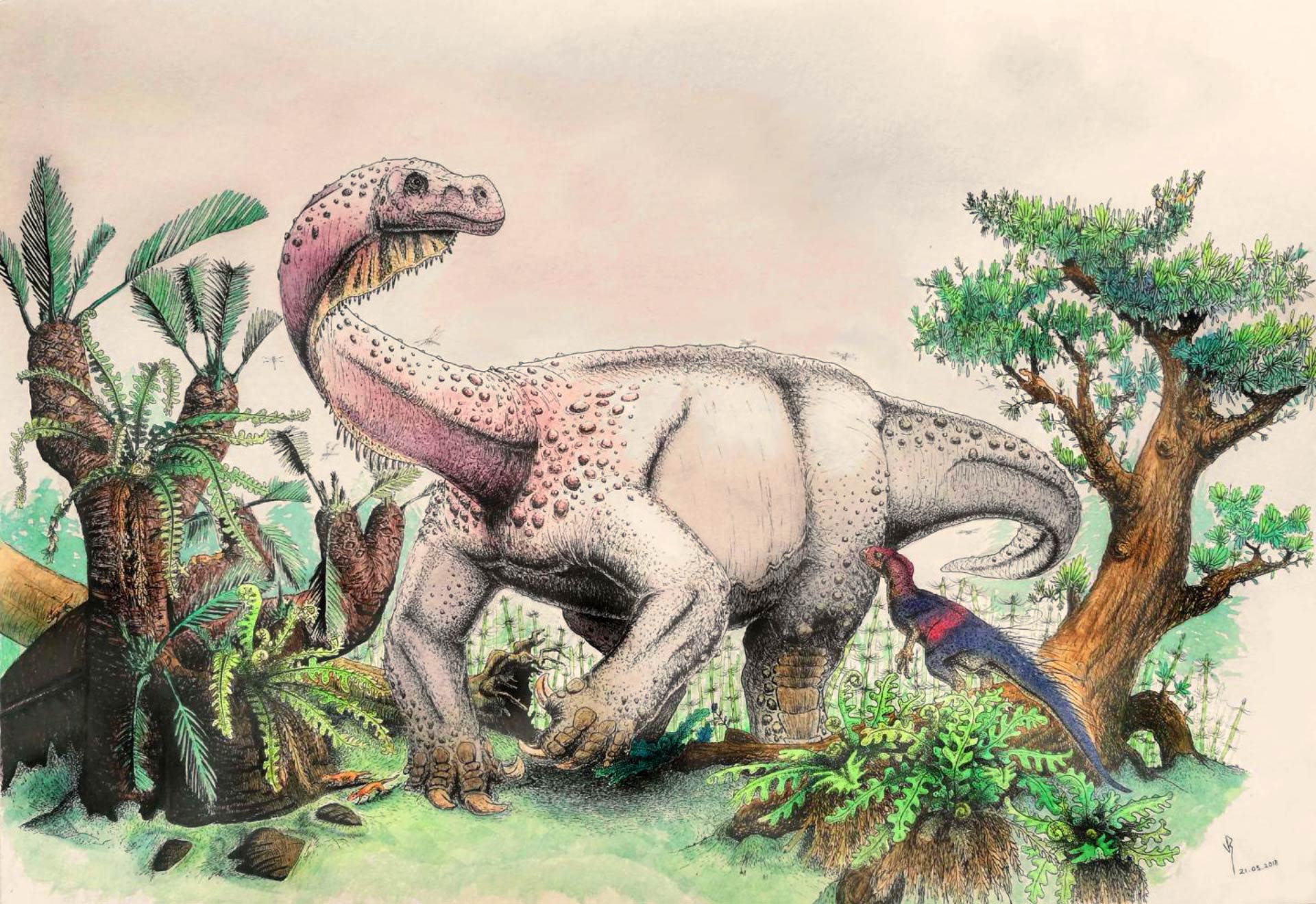
A Jurassic Sauropodomorph towers over prehistoric vegetation, showcasing its massive size and long neck in its natural habitat.
First Major Theropod Dinosaurs
By around 190 million years ago, the first large theropods—bipedal carnivores—began to dominate as apex predators. Dinosaurs like Dilophosaurus emerged as agile hunters, preying on smaller dinosaurs and early reptiles. These early theropods were medium-sized compared to later Jurassic predators, but they marked the start of theropods’ evolutionary trajectory toward larger and more specialized carnivores.
Middle Jurassic: Sauropods Reach New Heights
Around 175 million years ago, in the Middle Jurassic, sauropods grew to even larger sizes. Dinosaurs like Brachiosaurus and Apatosaurus dominated the landscape, with their enormous size allowing them to access plant material high in trees. This period marked a crucial evolutionary moment for sauropods, as they developed longer necks and greater size, making them more efficient herbivores and safer from predators.
New Herbivores: Stegosaurs and Ornithopods
Around 170 million years ago, new groups of herbivorous dinosaurs evolved and diversified. Stegosaurs, like Stegosaurus, developed distinctive bony plates and tail spikes, which may have been used for both display and defense. Ornithopods, like Camptosaurus, became smaller but highly mobile herbivores. These new herbivores filled different ecological niches, contributing to the changing landscape of the Jurassic.
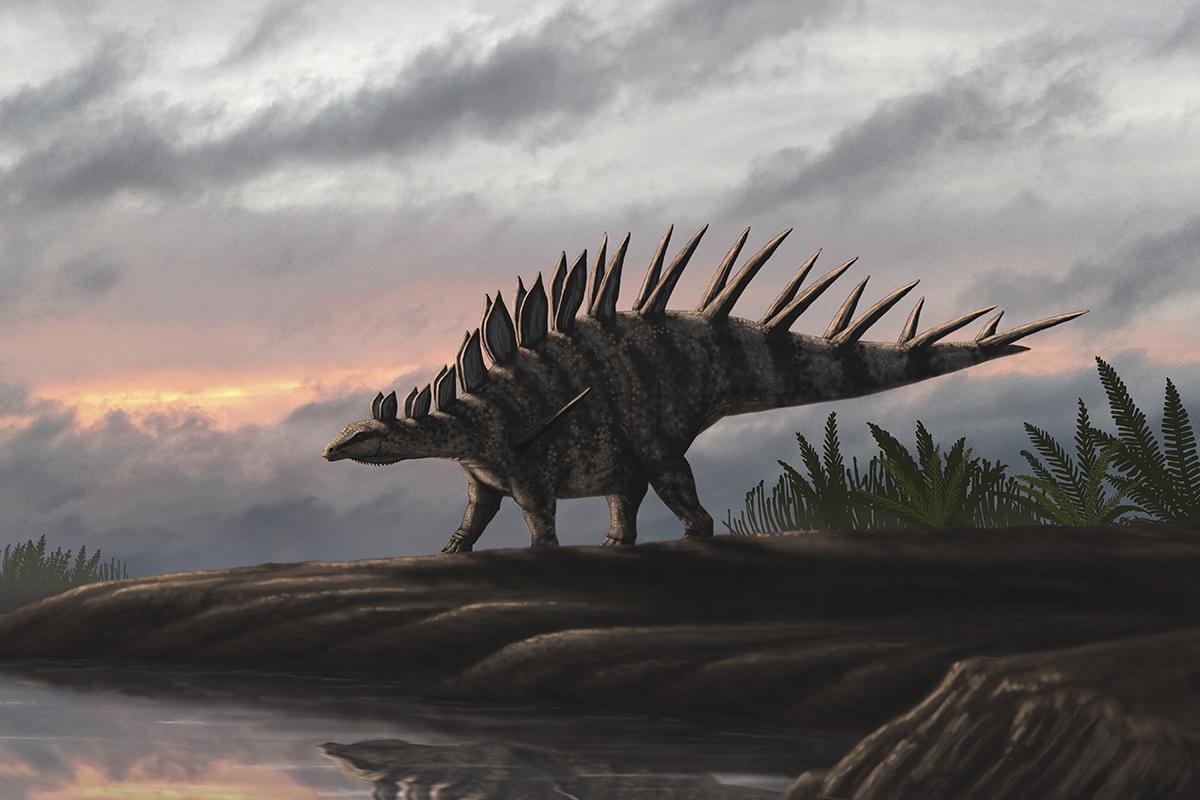
This herbivorous dinosaur, known for its distinctive double row of bony plates and tail spikes called thagomizers, used these features for display, thermoregulation, or defense against predators.
Large Theropods Dominate the Food Chain
By 160 million years ago, large theropod predators such as Allosaurus became dominant in the ecosystems of North America and Europe. These theropods were much larger than their Early Jurassic predecessors, using their size, strength, and sharp teeth to hunt the growing populations of herbivorous dinosaurs like sauropods and stegosaurs. Allosaurus became one of the most powerful hunters of the Jurassic.
Jurassic Skies and Seas
Around 155 million years ago, pterosaurs dominated the skies while large marine reptiles ruled the oceans. Pterosaurs, flying reptiles like Pterodactylus and later Pteranodon, were the first vertebrates to develop powered flight, filling aerial niches long before birds. In the oceans, ichthyosaurs and plesiosaurs preyed on marine life, though they were not true dinosaurs, they coexisted and often interacted with the coastal ecosystems of Jurassic dinosaurs.
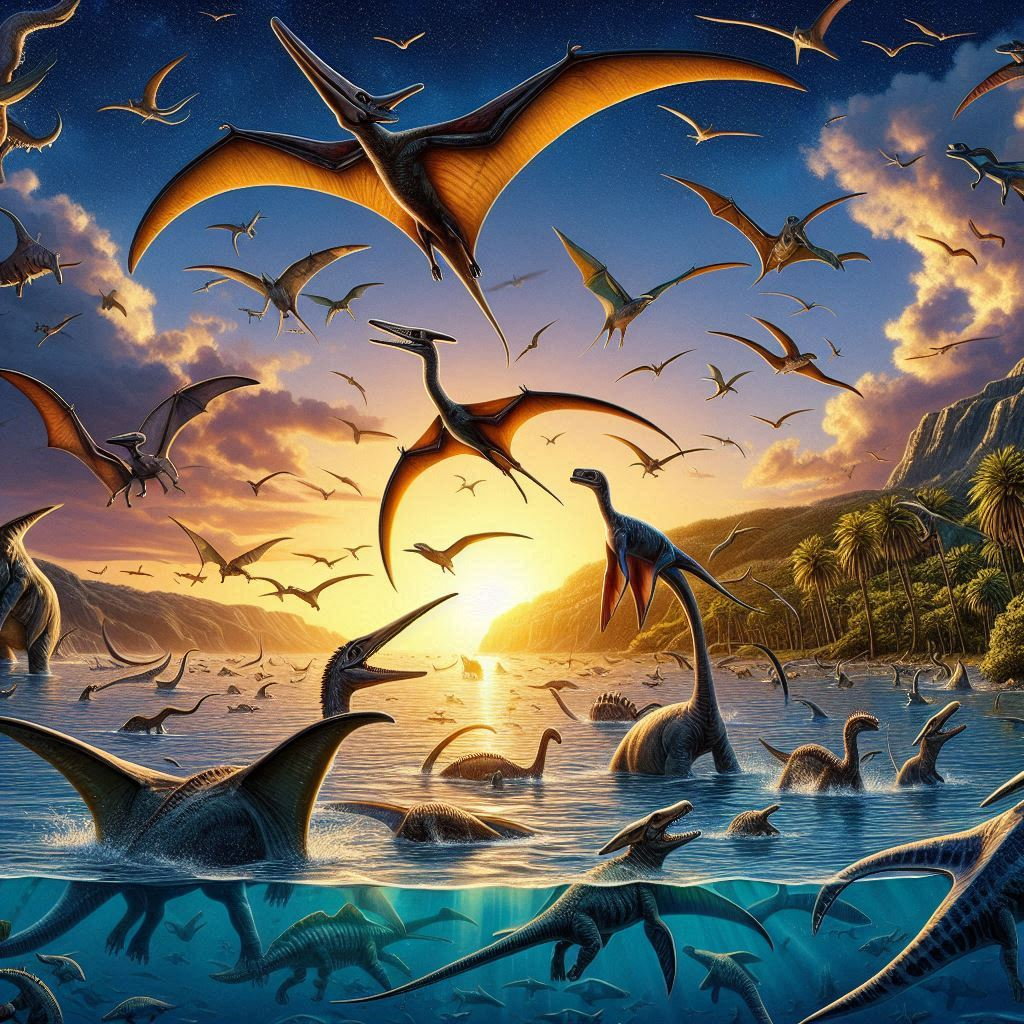
155 million years ago, pterosaurs like Pterodactylus and Pteranodon soared above, while ichthyosaurs and plesiosaurs ruled the oceans, coexisting with coastal Jurassic dinosaurs.
Late Jurassic: Peak of Sauropod Evolution
Around 150 million years ago, sauropods reached the peak of their evolution, with some species like Diplodocus and Brontosaurus achieving record-breaking sizes. These enormous herbivores had incredibly long necks, which allowed them to feed on plant material high up in coniferous trees. Their herd behavior and colossal size provided protection from most predators, securing their dominance as the largest animals on land.
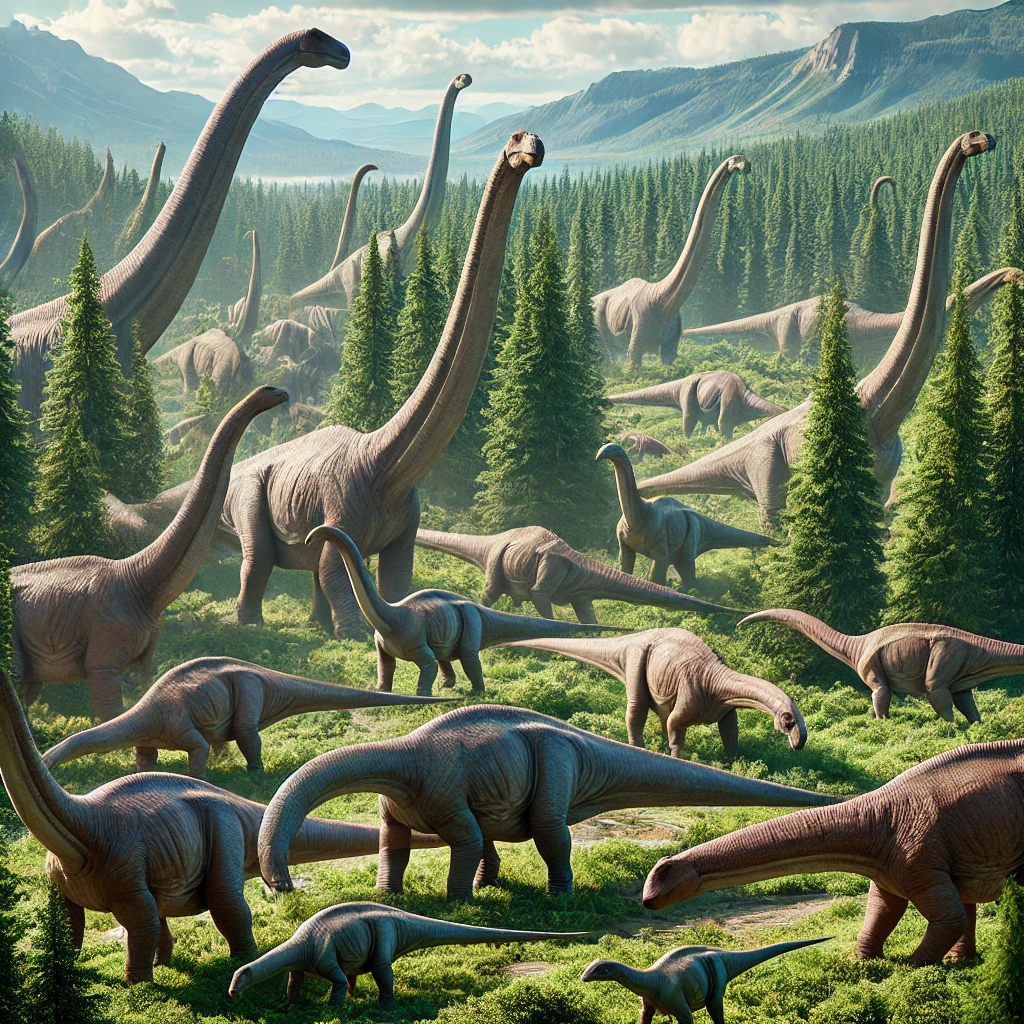
Diplodocus and Brontosaurus, towering over the landscape as they feed from the tall coniferous trees.
End of the Jurassic and Transition to the Cretaceous
The Jurassic Period ended around 145 million years ago, transitioning into the Cretaceous Period. As Pangaea continued to break apart, creating new landmasses, dinosaur species began to diversify further. The end of the Jurassic marked a shift in the types of dinosaurs that dominated, with tyrannosaurids, ceratopsians, and hadrosaurs set to rise in the Cretaceous. The Jurassic laid the foundation for the incredible dinosaur diversity that would characterize the next era.